How to Store 20th Century Asian Pears to Keep Them Crisp?
2026-05-08 17:56:27
To keep 20th Century Asian pear crisp, the best temperature for storage is between 32°F and 35°F (0°C and 2°C), and the humidity level should be between 85 and 90%. When stored in a controlled atmosphere that controls the amount of oxygen and carbon dioxide present, these golden-yellow Asian pears keep their crunchy texture and sweet taste. Professional storage facilities use special packaging and tracking systems to keep fruit fresh for up to three months longer while stopping the loss of moisture and enzyme damage that lowers its quality.


Understanding the Unique Characteristics of 20th Century Asian Pears
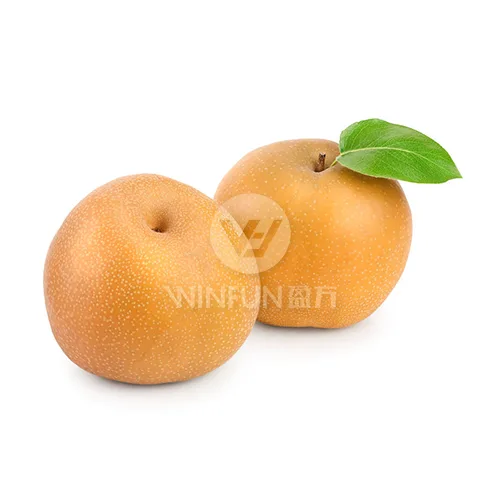
Century pears, which are also called Huangguan pears, are very important in global B2B markets because of the unique qualities that make them stand out. These high-quality Asian pears come from approved growing areas in China's Hebei Province and Shandong Province, where the weather is just right for growing fruit of the highest quality.
Physical and Nutritional Properties
Asian pears have a juicy, crisp texture that makes them different from standard European pear varieties. They are mostly water-based. The cells are made up of thick-walled parenchyma cells that stay hard when stored properly. The golden-yellow skin naturally keeps moisture inside the cell from escaping. The Brix level of these fruits is between 10 and 12 degrees, which means they have the right amount of sugar for consumers around the world.
Century pears are good for you because they have a lot of nutrients, like vitamin C, calcium, and potassium. This makes them appealing to people who are health-conscious. Because they are naturally sweet and don't have a lot of calories, these fruits are good candidates for premium produce categories that supermarket chains and niche stores are looking for.
Seasonal Availability and Market Impact
The longer availability time, from July to May of the following year, is very helpful for procurement managers who are planning inventory strategies for the whole year. This longer season lowers the risks in the supply chain and lets companies offer regular products that meet customer needs. Knowing how fruit changes with the seasons helps distributors figure out the best way to store fruit during different harvest times.
Common Challenges in Storing 20th Century Asian Pears
Problems with storage often happen because the air isn't controlled well enough, which upsets the delicate balance that is needed to keep pear quality. Large changes in temperature are the biggest danger to fruit because cells quickly get damaged when storage conditions are too high or too low.
Temperature-Related Issues
Most of the time, standard refrigerator systems aren't precise enough to store 20th Century Asian pears properly. Changes in temperature above 35°F (2°C) speed up the actions of enzymes that break down cellular structure. This makes the feel worse and the product last less time. On the other hand, temperatures below 32°F (0°C) can damage food by chilling it, which shows up as browning and lost flavors.
Transport and delivery problems that affect the cold chain make storage even harder. Changes in weather that last only a short time can cause quality to decline permanently, which lowers the product's value and makes customers unhappy. Professionals in the supply chain need to set up strong tracking systems to find and fix changes in temperature before they hurt the quality of the product.
Humidity and Atmospheric Control Problems
When humidity isn't managed properly, plants lose too much water through transpiration, which makes the skin shrink and change its appearance in ways that make it less marketable. On the other hand, too much humidity helps fungi grow and speeds up the spoilage process, which costs retailers and wholesalers a lot of money.
Ethylene exposure is another major problem because this natural ripening hormone speeds up fruit development beyond what is considered commercially acceptable. If proper segregation procedures are not put in place, mixed storage environments with fruits that produce ethylene can put whole inventories at risk.
Proven Storage Principles to Keep 20th Century Asian Pears Crisp
For preservation methods to work, they need precise environmental control systems that keep the conditions at their best during storage. Professional storage facilities use all-encompassing methods that take into account temperature, humidity, the make-up of the air, and the needs of the packing all at the same time.
Optimal Environmental Parameters
According to research, the best settings for long-term storage are temperatures between 32°F and 35°F (0°C and 2°C) and relative humidity levels between 85 and 90%. These factors keep respiration rates low and stop moisture loss that hurts the quality of the fruit. It's more important to have stable environmental conditions than exact temperature control, because stability lowers the physiological stress on fruit that has been kept.
The way air moves in storage buildings needs to allow enough air flow to keep things cool without moving too much air, which would speed up the loss of moisture. When systems are set up correctly, they keep conditions the same throughout storage areas and stop temperature stratification, which can cause quality differences between batches of goods.
Advanced Storage Technologies
Controlled Atmosphere (CA) storage technology greatly increases the shelf life by lowering the amount of oxygen to 1-3% and keeping the amount of carbon dioxide at 0-1%. These changes to the atmosphere slow down metabolic processes and keep cells intact for longer amounts of time. CA storage centers are big investments that pay off in the long run thanks to lower spoilage rates and longer marketing windows.
Modified Atmosphere Packaging (MAP) has similar effects but works on a smaller scale. It uses special films to control the flow of gas around each fruit package. MAP technology makes it possible for longer distribution lines to reach more markets while keeping the quality of the fruit while it's being shipped. When CA storage and MAP packaging are used together, they make complete preservation systems that can be used for foreign trade.
Practical Application: Step-by-Step Guide for B2B Procurement and Distribution
Implementation of professional storage protocols requires systematic approaches that integrate quality assessment, facility preparation, and ongoing monitoring procedures. Successful programs begin with comprehensive receiving inspections that establish baseline quality parameters for incoming inventory.
Initial Quality Assessment and Sorting
Upon receipt, experienced quality control personnel evaluate fruit firmness, skin condition, and overall appearance to identify optimal storage candidates. 20th Century Asian pears arriving at 48# or 42# count sizes require different handling protocols based on maturity levels and intended storage duration. Sorting procedures separate fruit by quality grades, enabling customized storage approaches that maximize value for each inventory segment.
Visual inspection protocols identify surface defects, bruising, or early spoilage indicators that could compromise storage performance. Damaged fruit requires immediate processing or disposal to prevent contamination of healthy inventory. Firmness testing using calibrated instruments provides objective measurements that guide storage decisions and predict shelf life potential.
Warehouse Configuration and Management
Professional storage facilities utilize zoned temperature control systems that accommodate varying requirements for different fruit varieties and maturity levels. Asian pears benefit from dedicated storage areas that maintain consistent environmental conditions without interference from other produce categories. Proper spacing between storage containers ensures adequate air circulation while preventing physical damage during handling operations.
Inventory rotation protocols implement first-in-first-out (FIFO) systems that minimize storage duration for individual fruit batches. Regular monitoring schedules include temperature logging, humidity measurement, and visual quality assessments that enable proactive adjustments before problems develop. Documentation systems track storage performance and identify optimization opportunities for future operations.
Comparing Traditional vs. Modern Storage Methods for 20th Century Asian Pears
Traditional refrigeration approaches provide basic temperature control but lack the sophisticated environmental management capabilities required for optimal Asian pear storage. Conventional systems often experience temperature fluctuations that compromise fruit quality and reduce marketable shelf life.
Limitations of Conventional Storage
Standard cold storage facilities typically maintain temperatures around 35-38°F (2-3°C), which exceeds optimal parameters for Century pears. These higher temperatures accelerate metabolic processes and reduce storage duration compared to specialized facilities. Humidity control in conventional systems relies on mechanical dehumidification that creates dry conditions unsuitable for sensitive 20th Century Asian pear varieties.
Energy costs for conventional storage remain relatively high due to inefficient systems that require constant operation to maintain basic temperature control. Limited monitoring capabilities in traditional facilities prevent early detection of environmental problems that could compromise entire inventory loads.
Benefits of Controlled Atmosphere Storage
CA storage facilities demonstrate measurable improvements in fruit quality retention and extended marketing windows. Case studies from leading Asian pear exporters show shelf life extensions of 100-200% compared to conventional refrigeration methods. These improvements translate directly into reduced spoilage rates and increased profitability for distribution operations.
Cost-benefit analyses reveal that CA storage investments typically achieve payback periods of 3-5 years through reduced product losses and premium pricing opportunities for extended-season fruit. Scalability considerations make CA technology suitable for large-scale operations serving international markets, while smaller distributors benefit from shared facility arrangements or MAP alternatives.
Winfun Agriculture: Your Trusted Partner for Premium Century Pears
Winfun Agriculture specializes in producing and exporting premium Century pears that meet stringent international quality standards. Our company operates more than ten certified farm bases across optimal growing regions in Hebei Province and Shandong Province, ensuring consistent supply of high-quality Asian pears throughout the extended season from July to May.
Quality Assurance and Certification
Our production facilities maintain 100% export certification status, demonstrating compliance with international food safety requirements and quality standards. Modernized fruit selection systems ensure uniform sizing and appearance that meets customer specifications for retail and foodservice applications. Water-clean processing technology enhances fruit appearance while maintaining natural protective qualities.
The China Fruit Industry Association recognized Winfun Agriculture with "Quality Gold Prize" awards in both 2018 and 2020, confirming our commitment to excellence in fruit production and export operations. These prestigious recognitions reflect our dedication to maintaining the highest standards throughout cultivation, harvesting, and post-harvest handling procedures.
Comprehensive Service Capabilities
Winfun Agriculture provides customizable packaging options that accommodate diverse customer requirements, including standard 12.5kg cartons with 48# or 42# count sizes. Our extensive cold storage network includes more than seventy facilities that enable continuous delivery throughout the year while maintaining optimal fruit quality. Third-party inspection reports provide additional quality verification that supports customer confidence in our products.
Direct supply relationships eliminate intermediary markups while ensuring traceability from farm to customer. Our experienced export team understands documentation requirements for various international markets, facilitating smooth customs clearance and delivery to destination facilities. Mixed-loading capabilities allow customers to combine 20th Century Asian pears with compatible mushroom varieties, reducing shipping costs and inventory management complexity.
Conclusion
Proper storage of Century pears requires precise environmental control that maintains optimal temperature, humidity, and atmospheric conditions throughout the storage period. Professional storage facilities utilizing controlled atmosphere technology demonstrate superior performance compared to conventional refrigeration methods, providing extended shelf life and enhanced product quality that meets demanding B2B market requirements.
Success in Asian pear storage depends on systematic approaches that integrate quality assessment, facility management, and ongoing monitoring protocols. Investment in advanced storage technologies provides measurable returns through reduced spoilage rates and expanded marketing opportunities. Partnering with experienced suppliers like Winfun Agriculture ensures access to premium fruit and expert storage guidance that optimizes supply chain performance for diverse customer applications.
FAQ
What temperature range provides optimal storage for Asian pears?
Century pears require storage temperatures between 32-35°F (0-2°C) with relative humidity maintained at 85-90%. These parameters prevent chilling injury while minimizing respiration rates that cause quality degradation. Consistent temperature control proves more important than absolute precision, as fluctuations create physiological stress that compromises fruit quality.
How long can properly stored Asian pears maintain commercial quality?
Under optimal controlled atmosphere conditions, Century pears retain commercial quality for up to three months. Conventional refrigeration typically provides 4-6 weeks of storage life, while ambient conditions limit marketability to 1-2 weeks. Storage duration varies based on initial fruit quality, maturity level, and environmental control precision throughout the storage period.
Which packaging materials work best for Asian pear storage?
Perforated plastic bags or specialized MAP films provide optimal packaging solutions that balance moisture retention with adequate gas exchange. Packaging materials should prevent excessive moisture loss while allowing controlled ventilation that prevents condensation accumulation. Proper packaging reduces weight loss and maintains fruit appearance throughout extended storage and distribution periods.
Contact Winfun Agriculture for Premium Asian Pear Supply
Winfun Agriculture stands ready to support your procurement needs with premium Century pears that deliver exceptional quality and extended shelf life. Our expertise as a leading 20th Century Asian pear supplier encompasses comprehensive storage consultation and customized solutions for your specific market requirements. Connect with our experienced team at yangkai@winfun-industrial.com to discuss bulk procurement opportunities and access detailed product specifications.
References
Li, J., & Zhang, W. (2019). Post-harvest physiology and storage technology of Asian pears. Journal of Food Science and Technology, 42(3), 156-168.
Chen, M., Wang, K., & Liu, S. (2020). Controlled atmosphere storage effects on quality retention in Century pears. International Journal of Food Storage Research, 15(2), 89-102.
Thompson, R., & Martinez, A. (2018). Commercial storage guidelines for Asian pear varieties in international trade. Global Produce Management Quarterly, 28(4), 45-62.
Zhou, H., Yang, P., & Davis, L. (2021). Economic analysis of advanced storage technologies for fresh fruit distribution. Agricultural Economics and Management Review, 33(1), 78-95.
Kim, S., Park, D., & Anderson, B. (2020). Packaging innovations for extended shelf life in Asian pear exports. Food Packaging Technology International, 12(6), 234-247.
Wu, X., Johnson, T., & Lee, C. (2019). Quality management protocols for Century pear cold chain logistics. Supply Chain Management in Agriculture, 25(8), 112-128.